The slow middle section's D♭ major tune returns in the coda's bass, respelled as C♯ major.
138 bars4/4Allegro agitato9-page PDFLevel 7 of 8
Or every piece, now and later: Lifetime, $199
Form
Intro G♯, then C♯ minorA themeB the bass climbsA′ theme again, extendedT chromatic run, then octavesC D♭ major, slowerA theme againB B againA′ A′ againT T againCoda C♯ major
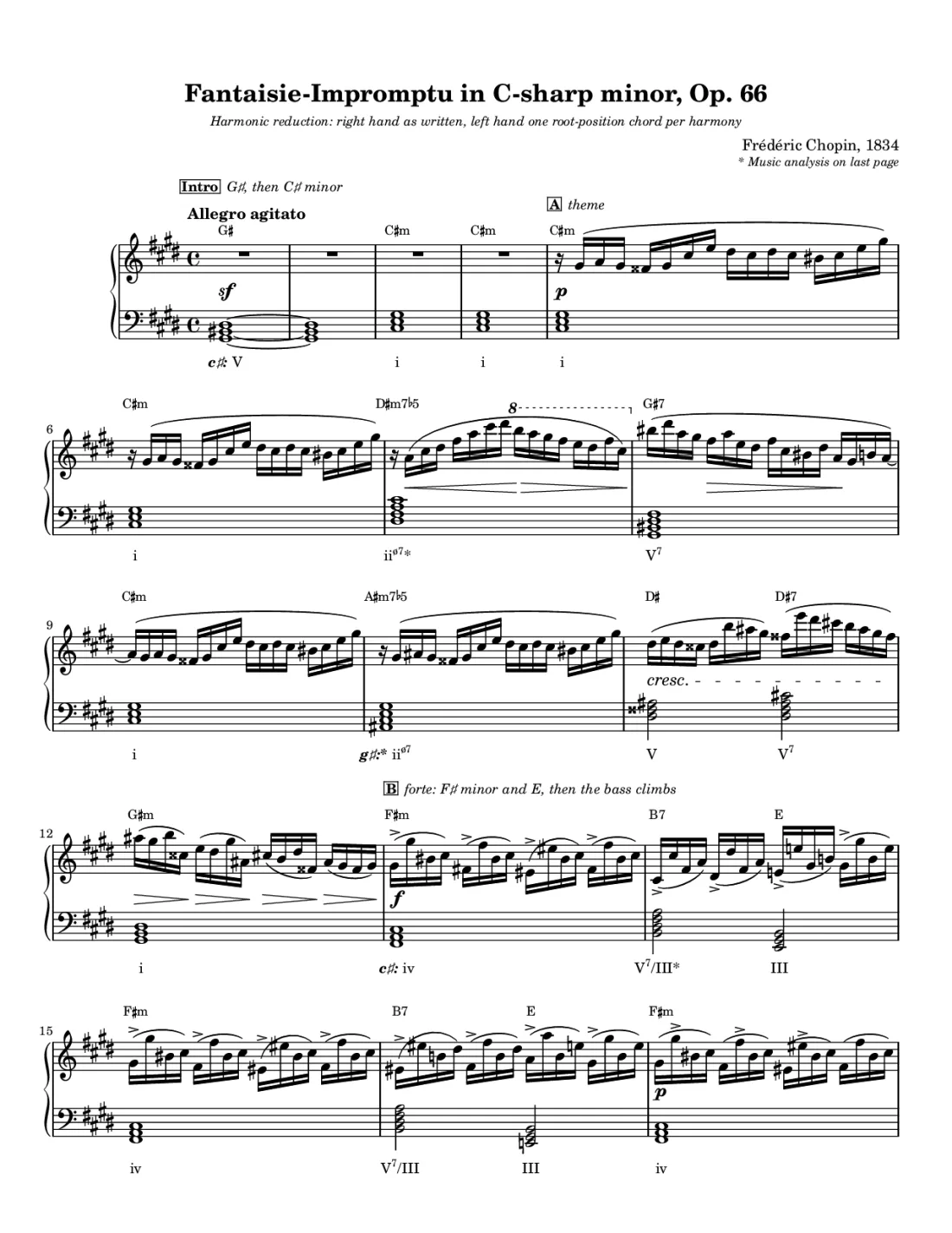
Opening, bars 5–9 · C♯ minor
Section by section
Intro and A (1–12): the theme
After a G♯ octave, the theme runs i, iiø⁷ (D♯, F♯, A, C♯), V⁷, i in bars 5–9, then cadences in G♯ minor.
B (13–24): the bass climbs
F♯ minor (iv) alternates with B⁷ and E. In bars 21–24 Chopin's bass climbs while the right hand falls by half steps, and B♯°⁷ in bar 22 does not resolve.
A′ and T (25–40): the theme, then the run
The theme returns and turns to F♯ minor. A chromatic run and octaves in both hands carry it down to G♯ (V) in bar 40.
C (41–82): Largo, then Moderato cantabile
A slow tune in D♭ major. Its second idea (59–62, again 71–74) makes a full cadence in A♭. Bars 83–118 then repeat 5–40.
Coda (119–138): why it ends in C♯ major
From bar 129 the key is C♯ major, and the bass sings the tune of section C. D♭ major is C♯ major spelled with flats, so the tune ends the piece in its own key: V⁷, then I.
The PDF includes a full page of analysis.